Flux Basics
Flux Basics
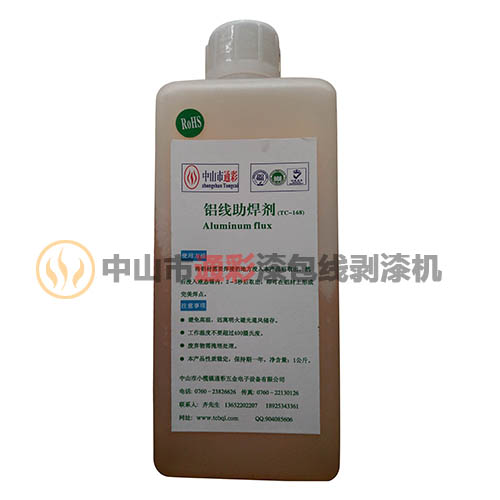
(i) Several electronic abbreviations:
PCB: PCB ODS: Ozone Depleting Substance RA: Active Flux
RMA: Medium Active Flux SMT: Surface Mount Technology IR: Insulation Resistance
Sir: Surface Insulation Resistance flux: Flux IC: Integrated Circuit
NCF: No-Clean Flux SoldingFlux: Flux
II. General information
Soldering Flux as used herein refers to liquid auxiliaries used for soldering of printed circuit board (PCB) tin. Because the flux used previously contained a large amount of rosin, the flux is also known as rosin, and it is still used today.
The use of auxiliaries in soldering operations is required because there is a layer of oxide and other substances that are not conducive to welding on the surface of the printed board and the surface of the liquid tin (actually tin-lead alloy). These substances prevent the metal on the surface of the circuit board from forming bonds with the solder and thus prevent the formation of electrical connections. This requires the flux to have the ability to remove oxides.Almost all substances discovered to date that can react with oxides are acidic, and in fact, all commercial fluxes use acid as the main flux.
Rosin is a kind of resin that is solid at room temperature. The main component is resin acid. It has good oxide removal ability at welding temperature 230 ℃ ~ 270 ℃. It is solid when it is cooled to below 70 ℃. It forms a protective layer on the circuit board and the solder joint metal. Therefore, rosin is the preferred material in most fluxes.Since rosin also has some disadvantages: darker color, sticky residue, large amount of smoke, etc., the original rosin is usually not used, but modified derivatives such as hydrogenated rosin, malay rosin, polymerized rosin, light-colored rosin, etc. Rosin is added in amounts ranging from 1% to 35%. Add flux with more rosin, higher specific gravity and darker color.
If the printed circuit board used is stored for a long time or the oxidation is serious due to other reasons, the use of rosin alone has shown insufficient soldering power. Add an activator that can improve the activity of rosin, usually an amine salt of hydrochloric acid or hydrobromic acid. The alkalinity of the amine can completely neutralize the acidity of the acid. Although this kind of activator can greatly improve the welding effect, the corrosion caused by chlorine or bromine and the reduction of insulation resistance are fatal defects.
Halogen-free (i.e. chlorine, bromine, etc.) fluxes developed in recent years have completely abandoned traditional activators and replaced them with another type of safe activator - small molecule organic acids. The ability of such activators to remove oxides alone is sufficient to meet welding requirements; at the same time, most can be sublimated (that is, changed directly from solid to gaseous without liquid) or vaporized at welding temperatures, and the insulation resistance of the residue is high.Our company's experiments have proved that there are more than ten organic acids that can be safely used in flux.
(3) Classification of fluxes:
Inorganic acid flux - hydrochloric acid, hydrofluoric acid, orthophosphoric acid. Not used for soldering printed circuit boards.
Organic Acid Flux (OA) - A solution of organic acids such as oleic acid, lactic acid.
Resin Flux ————— Contains natural or synthetic resin.
Among them, the resin flux can be divided into:
(1) Ordinary resin type flux (R type): A solution in which rosin is dissolved with a chlorine-free solvent.
(2) Medium active flux (RMA type): that is, medium active flux that can improve the activity is added to the R type flux.
(3) Active flux (RA type): that is, an active agent capable of improving activity is added to the R-type flux.
Previous: Paint stripping steel wire wheel wholesale, quality is the most critical
Next: None
Related News
- DNB-6 Single Head Rotary Enameled Wire Stripper and Stripper Equipment Operating Instructions!2024-01-21
- DNB-1 Enameled Wire Polisher | De-painter | Enameled Wire Stripper2024-01-20
- Paint stripping steel wire wheel wholesale, quality is the most critical2024-01-11
- A major breakthrough for taper wheels2024-01-10
- The advantage of the enameled wire stripping machine produced by Zhongshan Tongcai itself is that the price is cheap and the quality is stable!2024-01-06
- Which effect is better during the paint removal process of the paint stripping steel wire wheel and the nylon fiber wheel?2024-01-05
- What's the difference between a nylon fiber wheel and a tapered paint stripping wheel?2024-01-04